

Meta Spatial SDK vs Android XR OS: The XR Development Showdown

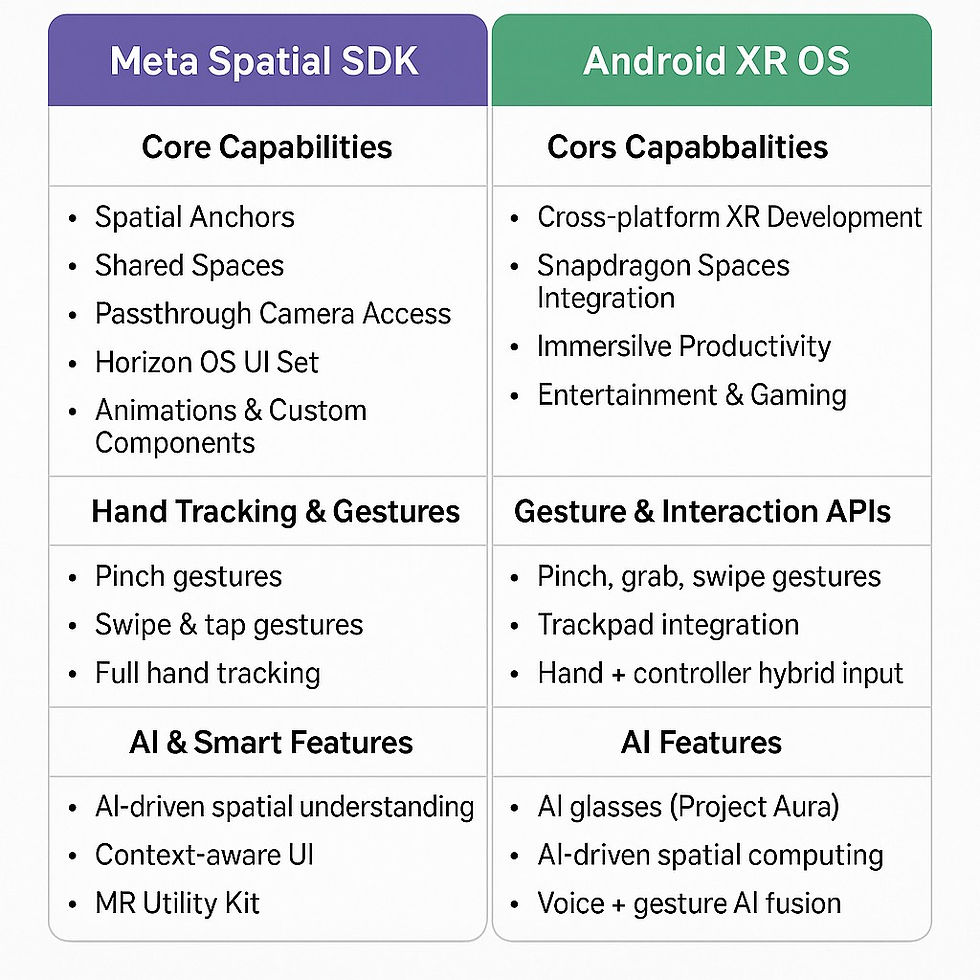
The XR ecosystem is heating up. On one side, Meta’s Spatial SDK/Horizon OS is redefining how developers build for Quest devices without heavy game engines. On the other, Google’s Android XR OS—backed by Samsung and Qualcomm—is positioning itself as the open standard for spatial computing. Both platforms promise to democratize XR development, but their approaches reveal two distinct philosophies.
🟣 Meta Spatial SDK / Horizon OS
Meta’s Spatial SDK lets developers use Android-native tools (Kotlin, Android Studio, libraries) to build XR apps directly for Quest devices.
Core Features: Spatial Anchors, Shared Spaces, Passthrough Camera, Horizon OS UI components, MR Utility Kit
Gestures: Pinch, swipe, tap, full hand tracking
AI Features: Context-aware UI, AI-driven spatial understanding, adaptive MR blending
Best For: Developers already in Meta’s ecosystem, seeking engine-free XR workflows
🔗 Developer resources:
🟢 Android XR OS
Google’s Android XR OS is the spatial computing OS powering Samsung Galaxy XR and Project Aura AI glasses.
Core Features: Cross-platform XR development, Snapdragon Spaces integration, immersive productivity, entertainment/gaming
Gestures: Pinch, grab, swipe, trackpad input, hybrid hand + controller APIs
AI Features: AI glasses (Project Aura), multimodal input (voice + gesture), AI-driven spatial computing
Best For: Developers seeking open ecosystems, enterprise XR, and AI-enhanced experiences
🔗 Developer resources:
Feature Area | Meta Spatial SDK / Horizon OS | Android XR OS |
Core Capabilities | Spatial Anchors, Shared Spaces, Passthrough, Horizon UI | Cross-platform XR, Snapdragon Spaces, Productivity, Gaming |
Gestures | Pinch, swipe, tap, full hand tracking | Pinch, grab, swipe, trackpad, hybrid input |
AI Features | Context-aware UI, AI spatial anchors, MR Utility Kit | AI glasses, multimodal input, AI-driven spatial computing |
Ecosystem Fit | Meta Quest devices, Horizon OS | Samsung Galaxy XR, Project Aura, open Android XR |


Forest Arrow’s full first-person view creates a deep sense of connection with the game world. At each shot feels deliberate, meaningful, and packed with potential rewards. The beautiful forest environment enhances focus, while the option to fire multiple arrows simultaneously ensures nonstop excitement in every round.