

GenBio's Virtual Cell AI Could Rewrite the Rules of Biological Research

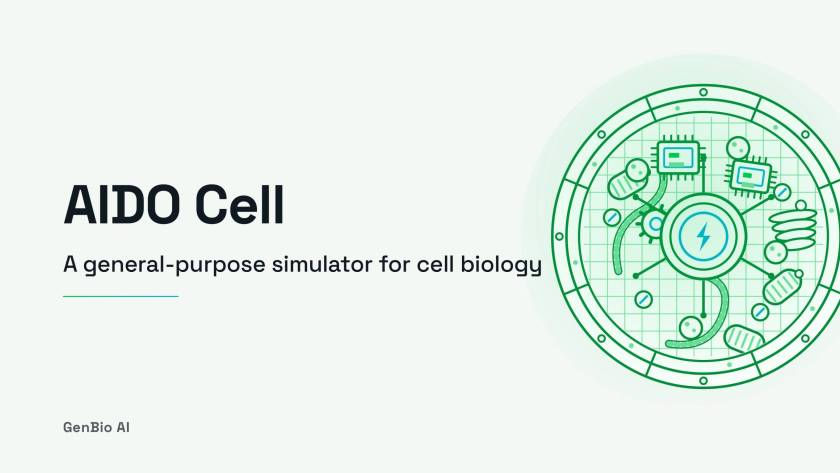
What if you could run thousands of biological experiments without touching a single petri dish? That's no longer a hypothetical. GenBio has launched a Virtual Cell AI model — a computational system designed to simulate how cells behave, respond, and function at a mechanistic level. It's a development that could fundamentally change how scientists approach drug discovery and biological research.
Building a Digital Mirror of Life
The core idea behind GenBio's technology is deceptively elegant: train an AI system on enough biological data that it can accurately predict cellular behavior without requiring physical experiments to generate new data points. Rather than observing how a cell responds to a compound in a lab, researchers could query the model computationally and receive a prediction grounded in the learned patterns of real biological systems.
This isn't science fiction. AI-driven cell simulation has been a long-standing ambition in computational biology, but recent advances in large-scale machine learning — the same underlying architectures that power modern language models — have made it increasingly achievable. GenBio appears to be among the first to bring a dedicated virtual cell system to a functional, deployable state.
Why This Matters for Drug Discovery
Drug development is notoriously slow and expensive. The average cost to bring a new drug to market sits in the billions of dollars, with a significant chunk of that investment going toward early-stage research and the inevitable failures of compounds that look promising in isolation but behave unpredictably in biological systems.
A virtual cell model introduces a compelling shortcut. If researchers can simulate how a candidate compound interacts with cellular machinery before committing to physical trials, they can filter out failures faster, prioritize more promising leads, and allocate wet-lab resources more efficiently. According to reporting from Lifespan.io, the technology's application potential spans both drug discovery and broader biological research — a wide net that reflects just how foundational cell-level simulation could become.
The Broader Implications for Biomedical Science
Beyond drug pipelines, virtual cell technology has the potential to accelerate research across fields that rely on understanding cellular dynamics — oncology, immunology, regenerative medicine, and more. Researchers studying disease mechanisms could model how cellular systems break down under various conditions. Those developing cell therapies could simulate how engineered cells might behave in specific environments before clinical deployment.
There's also an equity dimension worth noting. Physical lab infrastructure is expensive and unevenly distributed. Computational tools that replicate some of that experimental capacity could lower barriers for smaller research institutions and teams in under-resourced settings.
Grounded Optimism — With Caveats
It's worth tempering enthusiasm with realism. AI models are only as reliable as the data they're trained on, and biology is extraordinarily complex. Cellular behavior is influenced by context, environment, and interactions that may not be fully captured in any training dataset. Virtual cell models will need rigorous validation against real-world experimental results before they can be trusted as a primary research tool rather than a supplementary one.
GenBio will need to demonstrate not just that the model can generate predictions, but that those predictions hold up when tested in the physical world. That validation process will take time.
A Platform, Not Just a Product
What GenBio appears to be building is less a single tool and more a platform — one that could evolve as biological datasets grow and model architectures improve. If virtual cell AI matures into a reliable research infrastructure layer, it won't just speed up existing workflows. It could enable entirely new classes of experiments that were previously impractical at scale.
The launch of a functional virtual cell model is a milestone. Whether it becomes a cornerstone of 21st-century biomedical research will depend on what happens next — in peer review, in industry adoption, and in the lab.


Comments